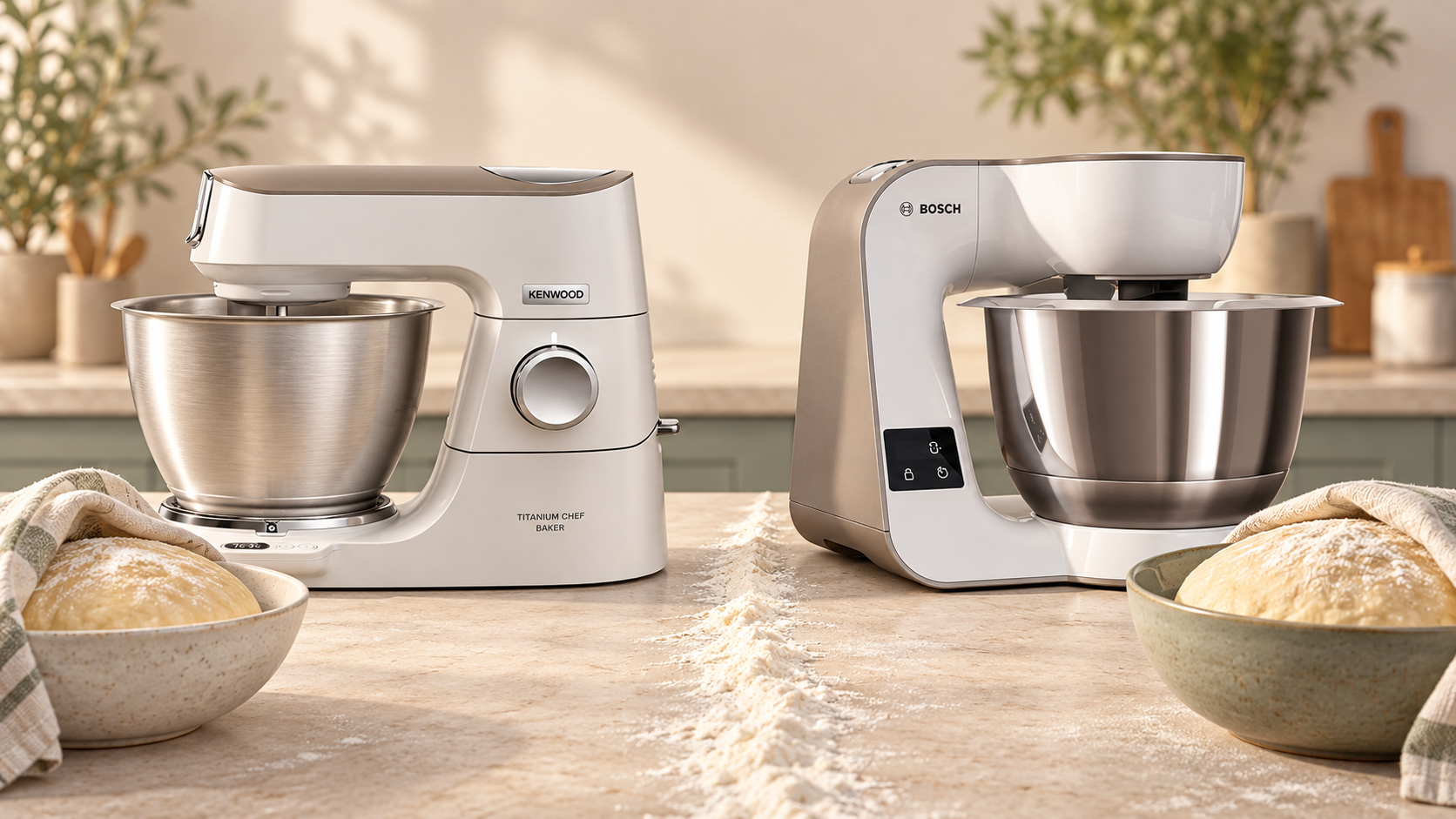

My guess is that whatever machine your mother owned is probably the one you automatically assumed you’d buy too.
If your mother had a Kenwood, you probably grew up thinking Kenwood was the mixer to have. And if she had a Bosch, then Bosch probably feels like the obvious choice.
And that’s how a lot of us choose appliances.
But kitchens today are different, apartments are smaller, prices are higher, and the way people cook and bake has changed too. So instead of automatically buying whatever you’ve seen at home, it’s worth looking at what’s actually the better fit for you.
Because the truth is, neither Kenwood nor Bosch is automatically better. They’re just built differently, and each one works better for a different type of person.
Kenwood: The Classic All-Purpose Mixer
Kenwood is usually known as the sturdier, heavier-duty option. It’s the mixer people often picture when they think of “serious baking.”
If you regularly bake and like the idea of one machine doing many different things, that’s usually where Kenwood shines.
It feels sturdy, powerful, and built for heavy use. It also tends to have more attachment options, which is great if you know you’ll actually use them.
But then comes the challah debate.
Because in our kitchens, mixers are somehow never just mixers. This is where many Bosch supporters suddenly become very passionate.
A lot of women feel Bosch handles very large challah dough more comfortably, especially the classic “5 kilo flour Erev Shabbos” type of baking.
Not because Kenwood is weak. Plenty of women make challah in Kenwoods every single week very successfully. But many people feel there’s a difference between making challah normally and constantly making huge heavy dough batches week after week.
Some women also feel Bosch strains less during long kneading and “walks” less across the counter. Which sounds dramatic until you’ve watched a mixer slowly begin travelling toward the edge of the counter while kneading dough.
The Downsides
But what people don’t always mention is that Kenwoods are heavy. Not slightly heavy. Actually heavy.
If you live in a smaller apartment, have limited counter space, or plan on putting your mixer away after every use, that can become annoying very quickly.
They also tend to cost more, and for many people, it ends up being far more machine than they realistically need.
Bosch: Practical & Dough-Friendly
Bosch, on the other hand, is usually lighter, simpler, and more practical for day-to-day life.
A lot of people love that it feels less overwhelming. It’s simpler to move around and store, which matters a lot in smaller kitchens.
And despite being lighter, many women specifically prefer Bosch because of challah baking. For large weekly dough batches, Bosch has developed a very loyal following.
A lot of Bosch owners will confidently tell you that:
- it handles dough better
- the motor strains less
- it’s quieter
- many people feel their dough also turns out especially well in Bosch mixers
- and the machine survives years of heavy weekly baking beautifully
Meanwhile, Kenwood owners are usually just as loyal and will argue that Kenwood feels sturdier, more versatile, and better for baking beyond challah alone.
The Downsides
That said, some people feel Bosch doesn’t feel as premium or sturdy overall as Kenwood.
Others prefer the classic metal bowl setup of Kenwood and feel Bosch takes a little getting used to at first, especially since some people find assembling the machine and clicking all the pieces together a bit complicated in the beginning.
And while Bosch supporters usually focus heavily on dough performance, many people still prefer Kenwood for overall versatility and non-challah baking.
One of the biggest mistakes people make when setting up a kitchen is buying appliances for the life they imagine they’ll have in ten years instead of the life they actually have now.
So Which One Should You Choose?
If you want a versatile, all-purpose baking machine that feels sturdy, premium, and great for general baking, Kenwood is probably worth it.
But if your kitchen revolves around large weekly challah baking, heavy dough batches, and practical day-to-day use, Bosch might actually suit you better.
Also worth knowing: many people end up loving whichever machine they learn on first. Once you know how your mixer behaves, how much dough it can handle, and all its little quirks, you become strangely loyal to it.