Real-Life Kitchen Questions We Asked a Rav
Please note: These answers were reviewed and approved by Rav Binyomin Hollander shlita. Halachos and customs may vary, so please ask your own Rav about any specific situation.
Can I put a hot or cold fleishig pot down directly on a milchig countertop? Does the material of the counter make a difference?
Strictly speaking, if both the pot and countertop are dry, it is permitted. The material of the countertop does not make a difference.
If onions were fried after being cut with a fleishig knife, may they be eaten with a milchig meal? Is there any waiting time involved?
There is no waiting time involved. However, they should not be eaten together with milchig food.
Can glass dishes be used for both fleishig and milchig? Does it make a difference whether they are used with hot or cold foods?
Sephardim and Yekkes permit this. For most other communities, the minhag is not to use the same glass dishes for both.
Can wooden dishes or utensils be used for both fleishig and milchig? Does it
make a difference whether they are used with hot or cold foods?
L’chatchilah, they should not be used for both fleishig and milchig. However, if they have already been used in the past for cold food, it is permitted.
I have two sinks next to each other. What practical halachos should I know to avoid problems?
Be careful that nothing spills from one sink into the other, especially while washing dishes. One practical option is to place a divider between the sinks to create a separation and avoid potential questions.
I accidentally washed my milchig dishes with a fleishig sponge. What is the halacha? Does it matter if the water was hot?
If the sponge was clean and had no meat residue on it, it is okay. If it wasn’t clean, it depends on whether there was actual meat present and whether the water was hot. In this case, ask your Rav.
May fleishig and milchig foods be stored on the same shelf in the fridge?
Are there any precautions I should take?
It is permitted. Pots should be covered so that nothing can spill out and they should be dry on the outside.
I only have two burners on my stovetop. What should I be careful about when cooking fleishig and milchig foods? Can I cook them at the same time?
Make sure there is no actual fleishig or milchig residue on the stovetop.
The two may be cooked at the same time.
The pots should be dry on the outside and should not touch each other. When removing a lid, be careful that the steam does not travel into the other pot.
If I have a glass table, do I need to cover it when eating fleishig or milchig meals?
No. As long as the fleishig and milchig foods don’t come into contact with each other, the glass table does not need to be covered.
Can I pour hot water from the same kettle into both fleishig and milchig dishes?
It is okay to pour from the same kettle into empty fleishig and milchig dishes. If there is food in the dish, keep the kettle far enough away that any steam reaching it is no longer yad soledes bo.
If I accidentally use a milchig spoon to serve hot fleishig food (or vice versa), what becomes problematic: the spoon, the food, or both?
If everything had been used within the previous 24 hours, then everything is problematic. After 24 hours, it will still be a problem unless your spoon was clean. There are many details involved, so ask your Rav about the specific situation.
Does steam from a pot create any kashrus concerns?
Steam can create a problem if it is trapped and has nowhere to escape. For example, if a ketchup bottle is held directly over a pot and the steam travels straight into it. If there is enough open space for the steam to disperse before reaching the bottle, it does not create a concern.
Is it okay if I mistakenly use the wrong cutting board?
It depends on whether the board was clean and dry and whether a sharp food, such as an onion, was involved. In this situation, ask your Rav.
Are separate dish towels necessary for fleishig and milchig?
Strictly speaking, the same towel may be used if the utensils are clean. However, the minhag is to have separate towels.
Can I use the same oven for both fleishig and milchig? What practical guidelines should I follow?
If both foods are covered the entire time, it’s okay, even if they’re in the oven at the same time.
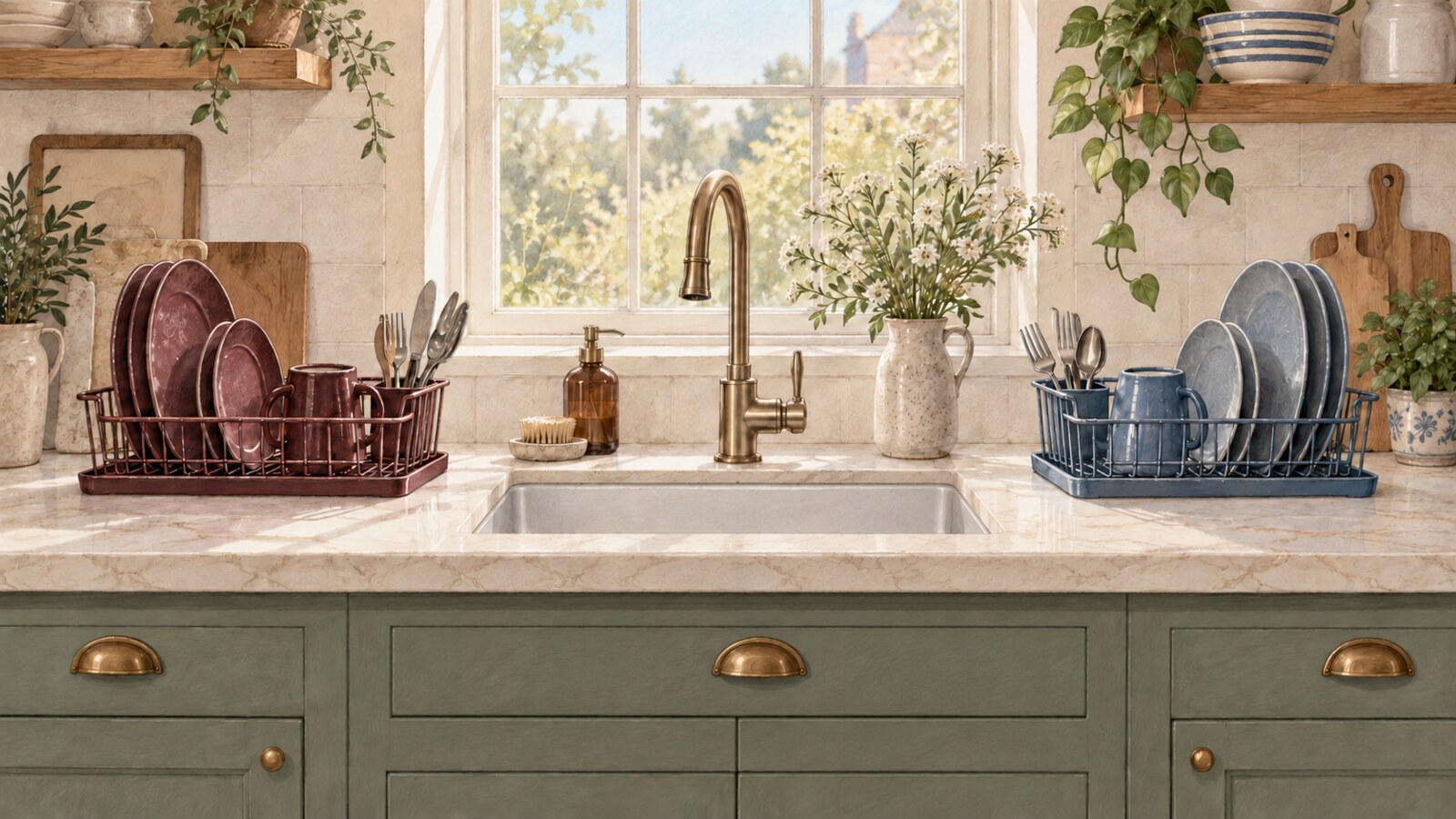
Do I need separate drying racks for fleishig and milchig dishes?
No.